
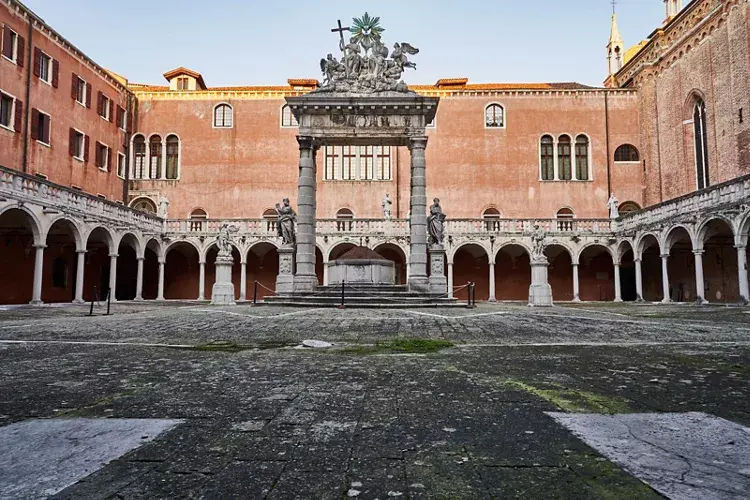
Given the unique characteristics of this tree, G&G decided to include the holm oak in the garden design for the former Frari Convent, which is now the garden of the State Archives. The tree was planted following the “acqua granda” of 2019, as a horse chestnut tree had previously stood there but was uprooted by the force of the wind and the intensity of the tide on that tragic night.
The selected holm oak is a young tree, so that it can adapt to its surroundings and thus grow and develop in harmony with the rest of the garden. Its evergreen leaves and ability to withstand adverse weather conditions make it ideal for outdoor spaces that need to maintain a lush appearance year-round.
Furthermore, their presence not only helps improve air quality but also promotes local biodiversity—key elements for a sustainable project, an issue to which G&G always pays close attention.
From a functional standpoint, holm oaks not only provide natural shade for resting areas but also act as natural barriers against the
wind, creating more comfortable microclimates within the garden. Finally, the presence of these plants helps enhance biodiversity by providing shelter and food for various species of local wildlife, making the garden not only an aesthetically pleasing space but also an ecologically active and sustainable one. The holm oak (Quercus ilex) is a plant whose aesthetic qualities are highly valued in gardening and landscape architecture. It is native to southern Europe, where it grows in predominantly arid and nutrient-poor natural environments, preferably on limestone soils. It is a very long-lived species, capable of living for over 1,000 years, thanks to its robust and weather-resistant structure.

The holm oak has a beautiful, imposing, and majestic appearance and is particularly prized for its bushy form, which makes it ideal for creating tall, dense hedges.
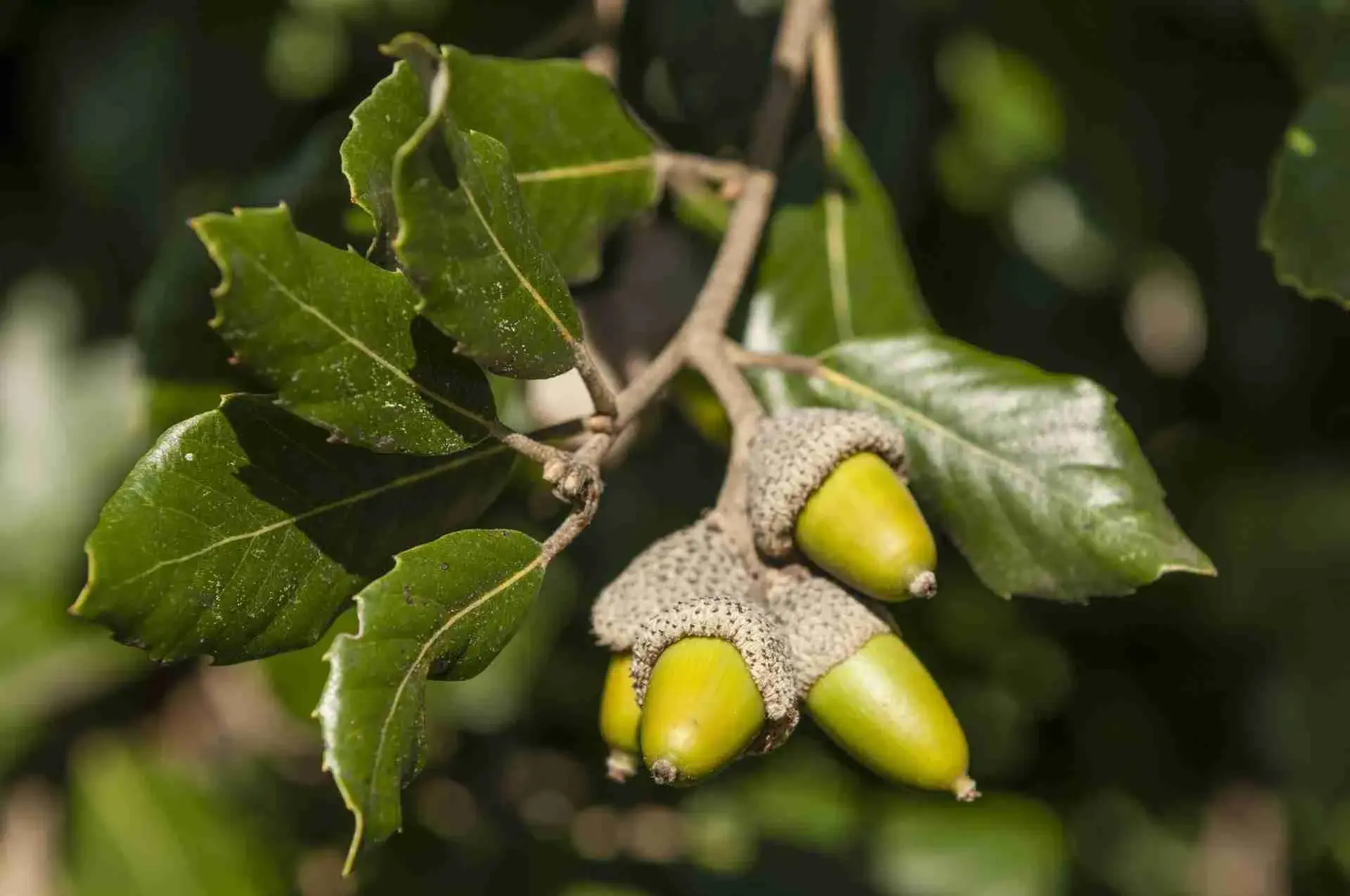
Its young, upper leaves are broad, ranging from 1 to 3 cm in length, with serrated, prickly edges, while the older, lower leaves are longer, ranging from 2 to 9 cm, with smooth edges. The leaves are pale green, but as they mature, they take on a darker shade on top and a white underside, creating a striking color contrast.